What is PAS 2080, and why is it important?
What is PAS 2080?
PAS 2080 specifies the requirements for the management of whole-life carbon in buildings and infrastructure.
The standard looks at the whole value chain, aiming to reduce carbon and cost through more intelligent design, construction and use.
The goal of the PAS is to support the transition to a net zero carbon economy by 2050.
To do this, it defines the contributions that each value chain member can make towards the net zero transition, requiring close collaboration to implement the carbon management process.
PAS 2080 ensures carbon is consistently and transparently quantified at key points in infrastructure delivery and promotes the sharing of data along the value chain.
An updated version of PAS 2080 was published in 2023 to speed up decarbonisation across the built environment.
Why is it important?
The urgency for action on climate change gained worldwide acceptance with the COP21 Paris Agreement in 2016.
Governments and private companies around the world are continuing to plan to transition to net zero by or before 2050.
Infrastructure is associated with half of UK Greenhouse Gas emissions, 30% of which is directly attributed to the construction, operation and maintenance of infrastructure assets.
The alignment of behaviours and good practices that the latest PAS 2080 sets out can help accelerate whole-life carbon reduction.
If buildings and infrastructure are to be successfully decarbonised in line with carbon emissions targets, adherence to standards like PAS 2080 is vital.
How can Qflow help?
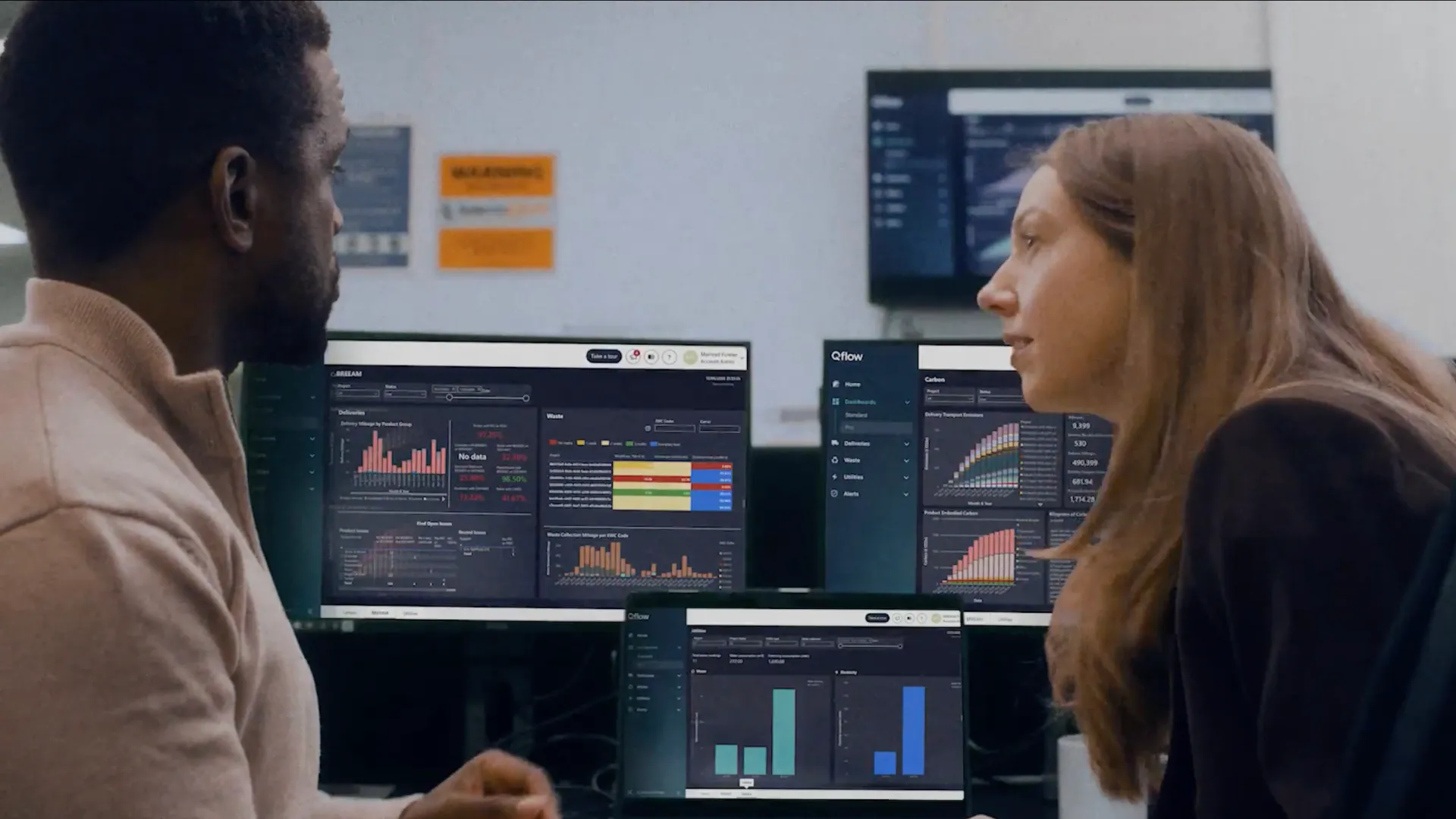
Stakeholders up and down the value chain can use Qflow to ease collaboration and streamline carbon management processes.
Our easy-to-use technology removes the need to chase data from other parts of the supply chain by enabling data capture and audit with one click.
With simple data capture, companies can improve data quality, save time, and reduce administrative costs. Qflow enables accessible, transferable data and a clear & accountable audit chain.
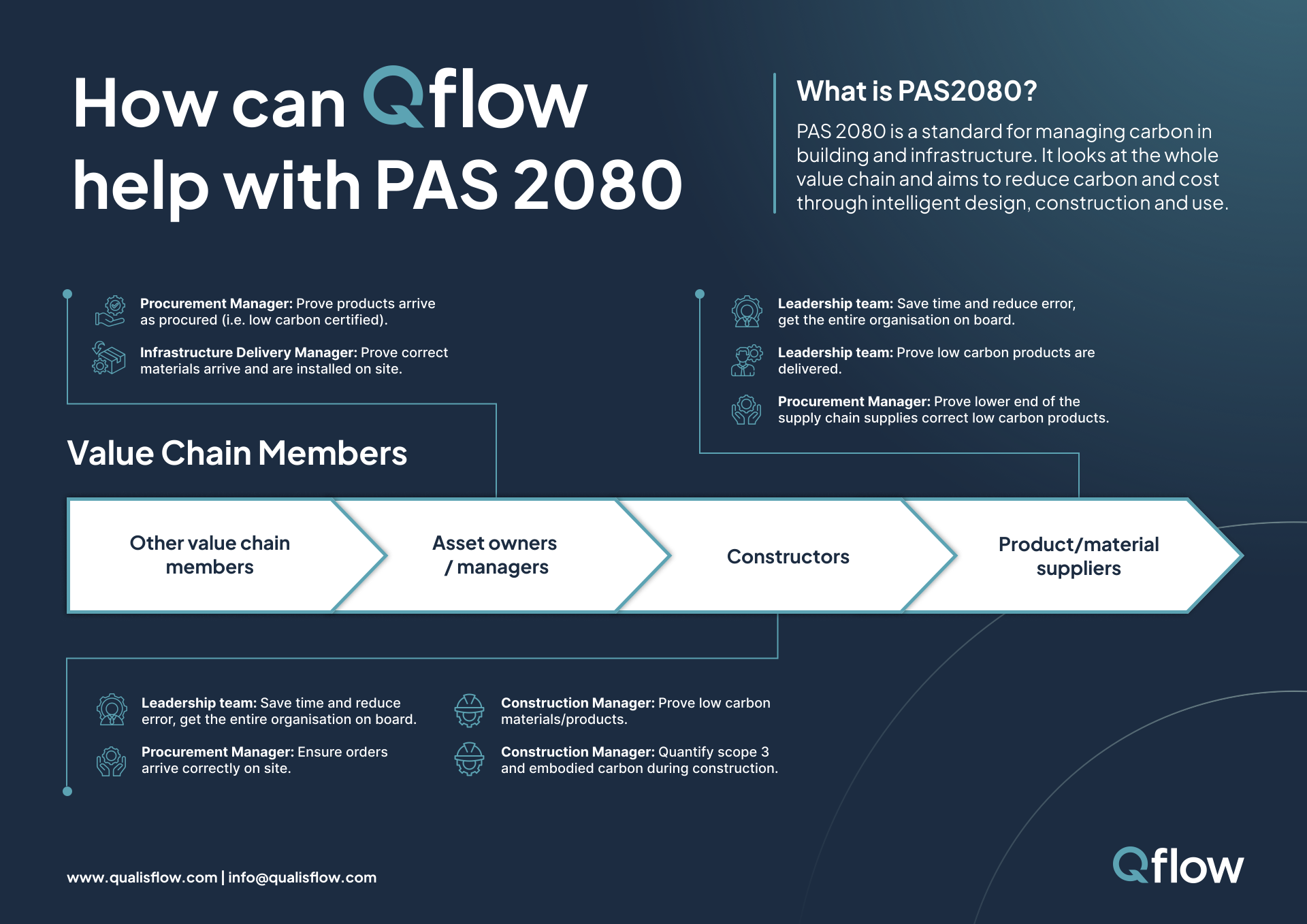
The infographic below breaks down how Qflow helps building and infrastructure professionals across the whole value chain meet PAS 2080.


Ready to see Qflow in action?
A 20-minute call to walk through the product on the parts that matter to your team.
News & Insights
Resources to build site better data.
Read insights, reports and practical guides on construction waste, carbon, materials, compliance and the changing role of data in the built environment.