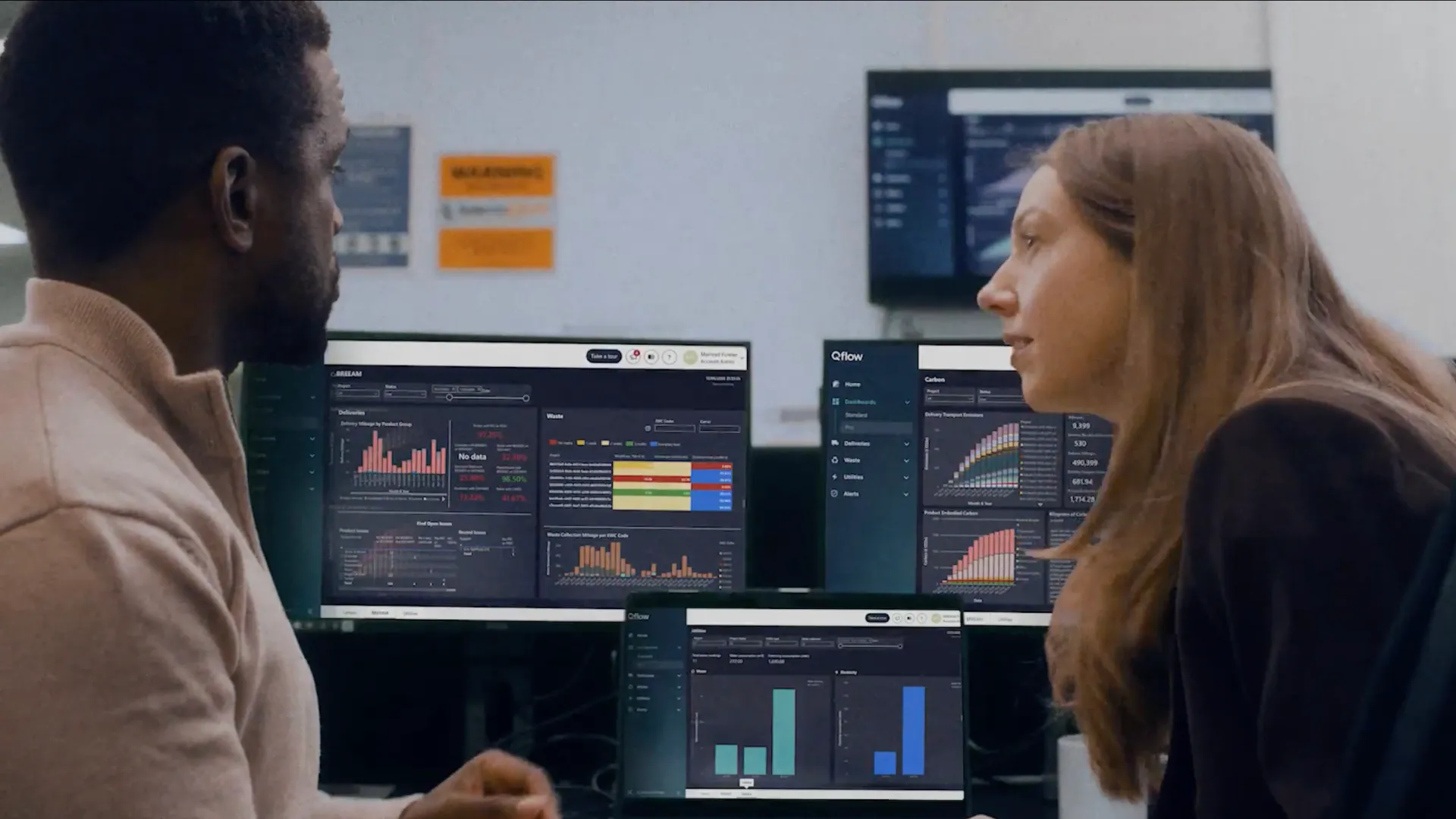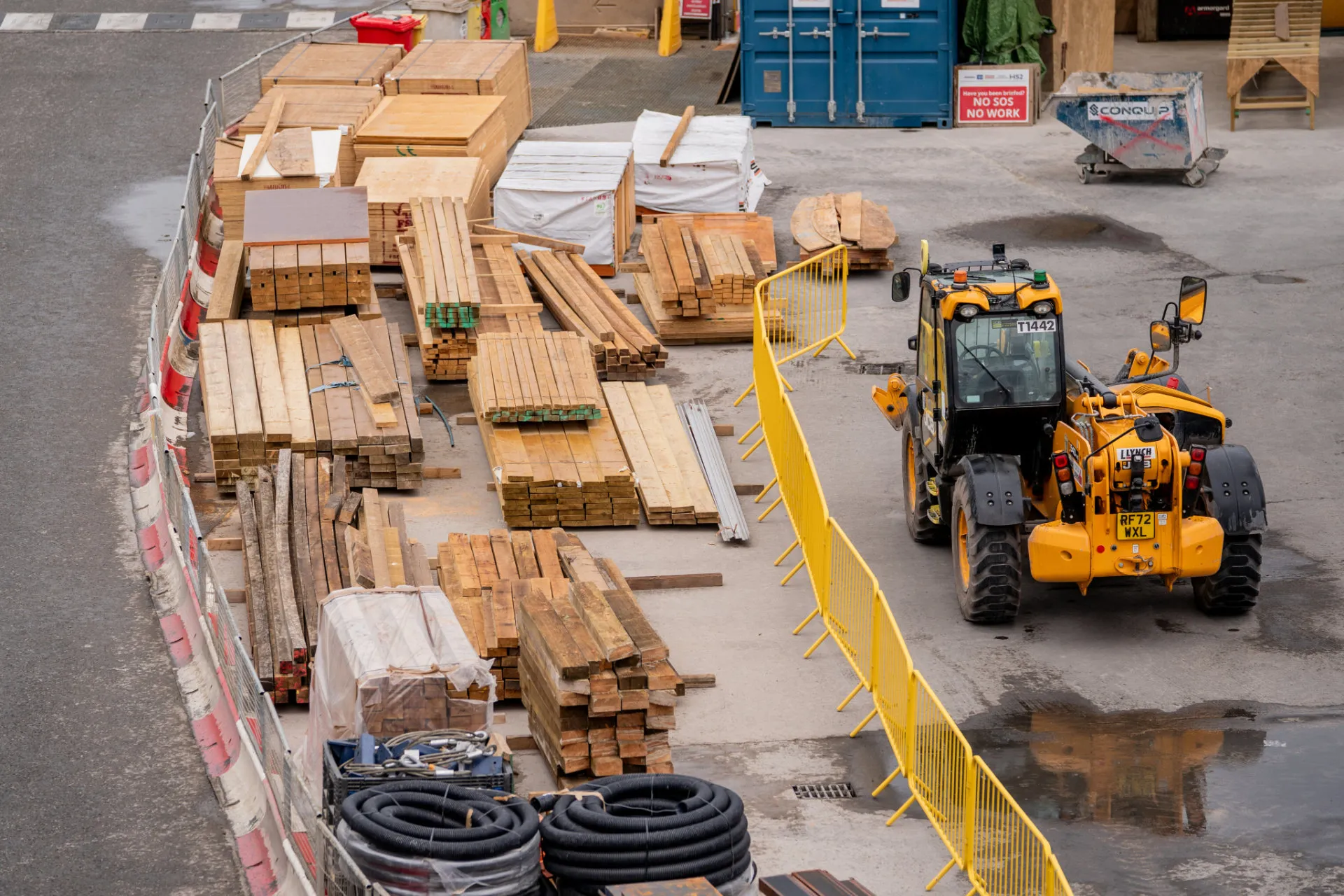
Turn site materials and waste data into carbon insight.
Qflow captures materials and waste data as work happens on site, enriches it with the information needed to understand carbon impact, and creates a trusted dataset for embodied carbon and Scope 3 reporting. All without ever relying on manual reporting from your supply chain.
What You Get
Carbon evidence captured as work happens.
The capabilities that turn everyday material deliveries into structured carbon data and traceable sustainability evidence.
Catch gaps at the gate
Capture delivery notes and waste transfer notes as work happens, using AI to create a digital record of the materials coming onto site and waste leaving it.
Enrich the data automatically
Enrich data with additional material, supplier, quantity and waste information, filling data gaps and improving the quality of your dataset.
Turn activity into carbon insight
Use verified materials and waste data to calculate carbon impacts and understand what is driving carbon across projects.
Build an audit-ready carbon record
Maintain a structured, traceable record of materials and waste movements to support embodied carbon, Scope 3 and sustainability reporting.
Why QFlow
Better carbon reporting starts with better site data.
Your carbon calculations are only as reliable as the data behind them. Qflow automatically captures materials and waste data as work happens, replacing incomplete site paperwork with a trusted dataset for embodied carbon, Scope 3 and environmental reporting.
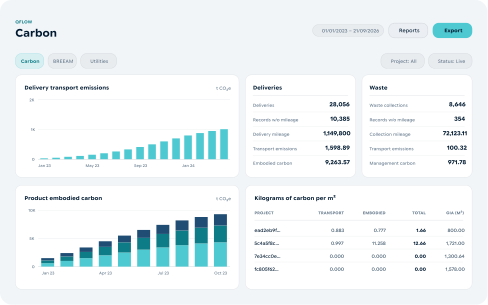
Remove the manual workload
Get the data sustainability teams need without chasing site teams, cleaning spreadsheets or manually compiling records for reporting.
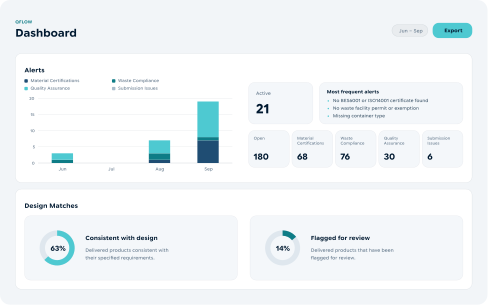
Data you can trust
AI, purpose-built technology, years of construction data and human verification combine to deliver high-quality, audit-ready data without any manual input.
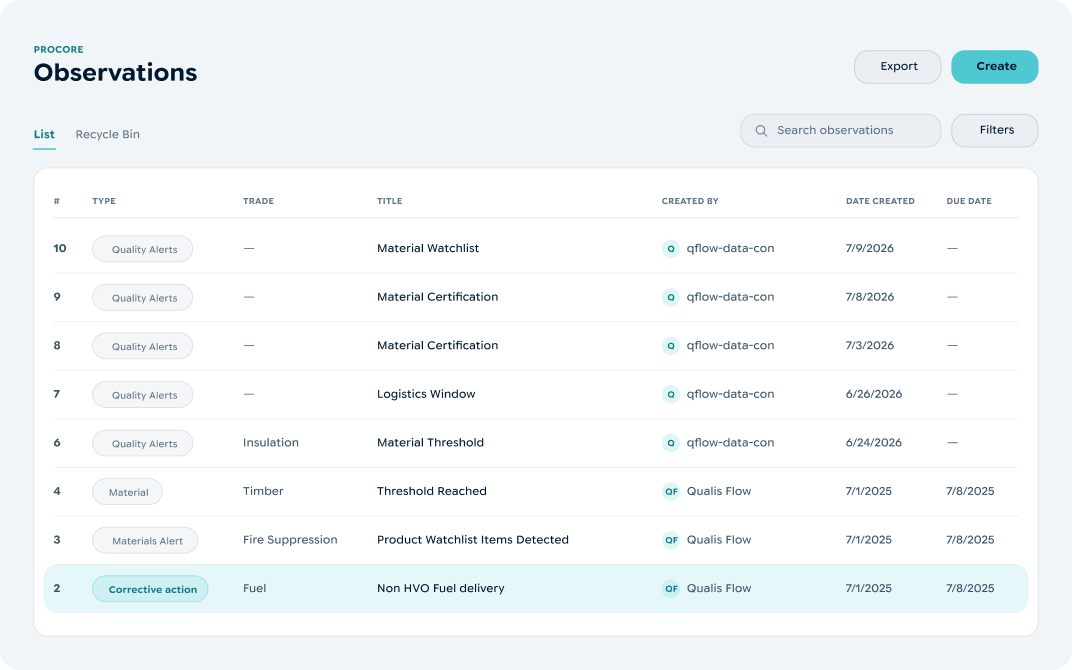
Fit into existing workflows
Integrate trusted Qflow data into the systems and reporting workflows your teams already use, rather than creating another siloed source of information.
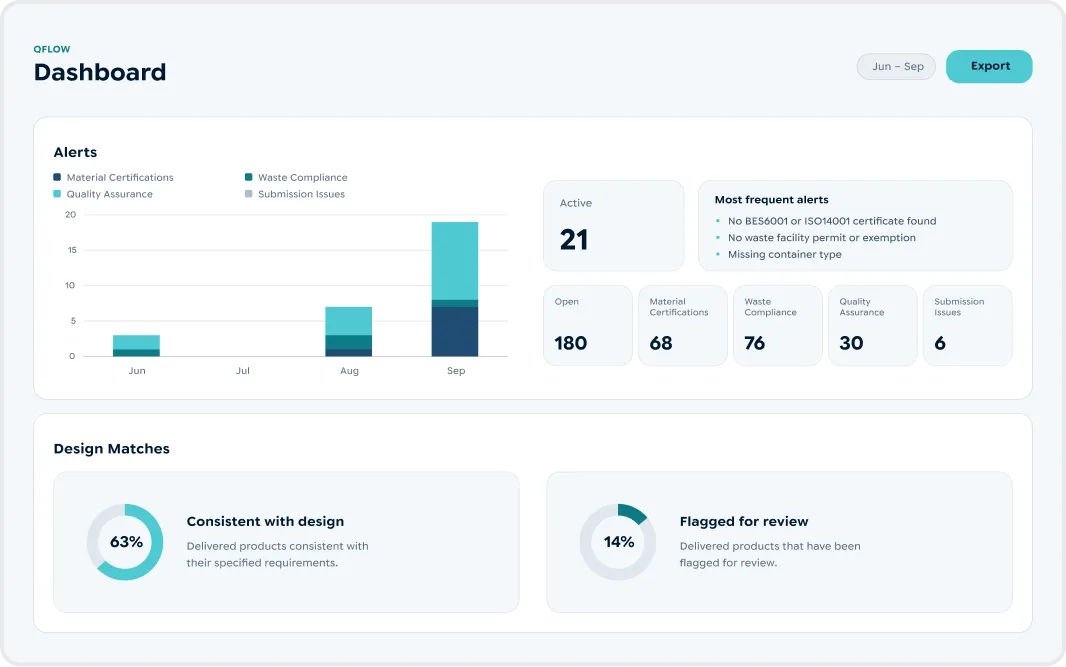
One dataset. More value.
The same trusted data can support sustainability, commercial, finance and quality teams increasing the value of every record captured on site.


Know your carbon data before reporting starts.
Book a demo to see how Qflow captures carbon evidence from live site activity.
How It Works
Carbon data capture. Simplified.
A clear, repeatable flow that helps teams capture the carbon evidence they need every time a relevant material arrives on site.
Capture a delivery or waste record
Take a photo of a delivery note or waste transfer note as materials arrive or waste leaves site. Qflow captures the record without requiring manual data entry from the site team.
Turn paperwork into structured data
Qflow extracts, enriches and structures the information behind each movement, turning highly variable documentation into a clean dataset for onwards analysis.
Enrich what the ticket can't tell you
Qflow fills gaps and adds context beyond the original record, from supplier and product information to journey distances, material classifications and the carbon data needed to understand impact.
Verify the data before you use it
This is AI technology purpose-built to support the construction industry, taking years of on-site data and human verification to create a trusted record teams can use with confidence.
Put the data to work.
Analyse and report on materials, waste and carbon performance in Qflow, or integrate the data into your existing systems (including specialised LCA tools). The same dataset can support sustainability, commercial, finance and quality workflows.
Testimonials
Empowering companies building the future.
Here's what they shared about their experience working with us.
The biggest support that Qflow offered was time-saving. Automation of the system provided workable, confident data for us to discuss with the client without needing to spend days going through documents.

I have always been very conscious of how time consuming ensuring compliance with waste regulations and corporate procurement policies can be for our site teams. Qflow takes most of the burden away, saving the site team’s time and improving data accuracy. Automating the system also means that we can gather more data than ever before on material use, which wil

By adopting the Qflow system we were able to achieve our FSC certification with ease and it saved us thousands of pounds in the process. We are delighted with what the team at Qflow have done for the Wood Wharf project.

Qflow makes the site process more efficient and less admin heavy, so it's easy to get site teams’ buy-in.

Qflow has made the capturing of data much easier and more accurate. The data is driven by facts, and can be easily demonstrated to ensure everyone can see carbon emissions project by project. This will lead to us being able to set targets for similar sized projects and make knowledgeable, informed decisions.

News & Insights
Resources to build site better data.
Read insights, reports and practical guides on construction waste, carbon, materials, compliance and the changing role of data in the built environment.
Frequently Asked Questions
Qflow combines automation, algorithms, frontier AI models, real-world construction data and human verification to capture, enrich and check site information. Rather than relying on OCR or AI alone, Qflow uses multiple layers of technology and human expertise to create the high-quality, audit-ready data needed for reliable reporting, analytics and decision-making.
Qflow automates the capture, checking and enrichment of site data, removing hours of manual data entry, chasing records, checking information and cleaning spreadsheets. Having this data readily available also avoids the need for you to chase your supply chains to upload monthly reports, giving you greater visibility on-site.
Qflow captures delivery notes and waste transfer notes from site, while design specifications and other pre-construction documents can be uploaded to compare what was planned with what was actually delivered.
Yes. Qflow creates a clear, traceable record of the materials delivered to site, helping teams evidence what was actually installed against what was designed and specified.
Yes. Qflow automatically captures and verifies the materials and waste data needed for BREEAM reporting for responsible sourcing and waste credits, creating a clear audit trail without manual data entry.
Qflow is designed to fit into existing site processes rather than create new ones. Site teams can capture records with a quick photo in the mobile app, submit them by email, or integrate Qflow with the logistics systems already in use. This means organisations can deploy Qflow quickly, without complex changes to the way projects operate. Qflow provides accurate, verified materials and waste data for your current workflows and reporting, either replacing existing systems or working alongside them, depending on your set-up. Get in touch with our team to discuss your specific systems.
Qflow creates a trusted source of construction data for the entire project team, from sustainability and quality to finance, procurement and project delivery.
With one simple photo of delivery and waste tickets in the Qflow mobile app, Qflow captures, enriches and verifies materials and waste data, compares deliveries against design specifications, and alerts teams to discrepancies before they become problems. It helps you turn siloed documentation into a single, auditable digital footprint of a building, without the manual data entry.