How artificial intelligence could revolutionise the construction industry
From integration to prediction
Artificial Intelligence (AI) is a powerful technology that can propel our society to a new era of wonders. Just as electricity changed the world a century ago, AI is changing the world we live in right now. Although someone might disagree with this sentence, the fundamental truth is that AI already powers most of the industries supporting our society, from automotive (e.g., self driving cars) to entertainment (e.g., Netflix recommendation algorithms) to medicine (e.g.,Neural networks used in radiology). And the construction industry is immediately behind the curve.
In fact, the construction industry can profit widely from AI, and there are already several use cases worth noting. For example, scheduling a project is difficult and most of the time the construction plan will run late. By analyzing thousands of different options, a Generative Adversarial Network (GAN) could recommend the best course of action in order to minimize the probability of incurring delays, and hence to deliver the project on time.
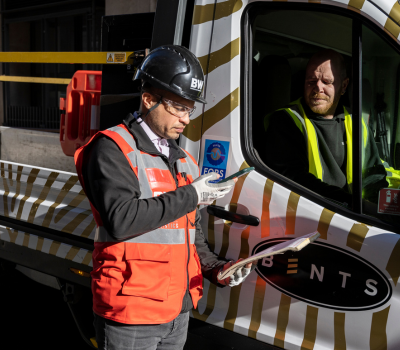
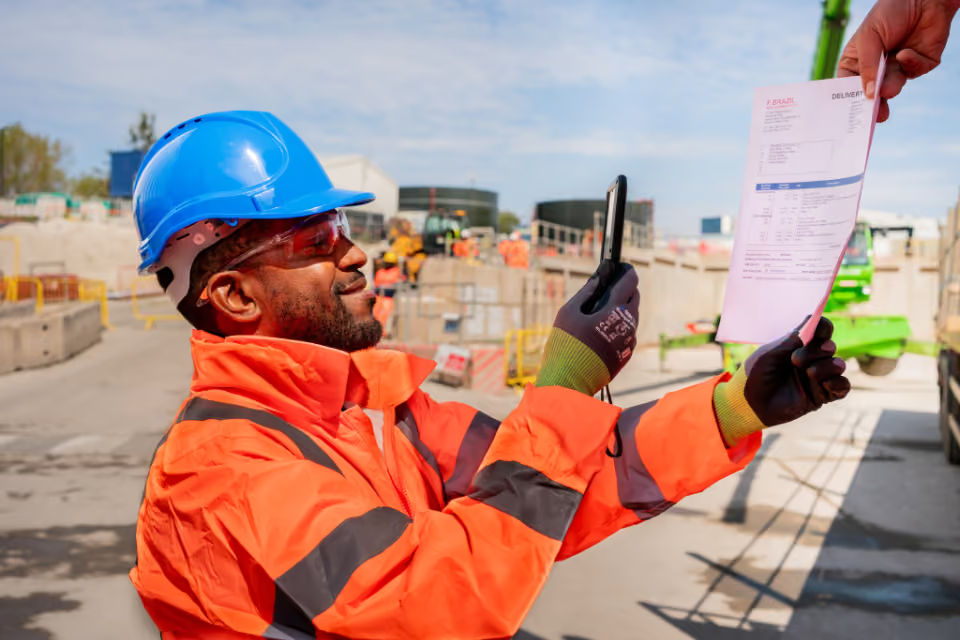
Likewise, keeping track of all the materials arriving and leaving a construction site is tedious work and highly prone to human error. However, an Optical Character Recognition (OCR) combined with a Natural Language Processing (NLP) algorithm could digitize the tickets in a consistent manner, and automatically track the movement of material on a construction site.
Similarly, keeping the level of exceedances like air quality within the strict UK regulation is a difficult job, and can be affected by weather conditions and traffic as well as construction activities. By integrating and analyzing data from sensors, an AI could process the data and help to keep the exceedances below the optimal threshold.
AI can affect the construction industry in powerful ways, helping companies to cut costs, respect timelines and improve efficiency. Yet, AI offerings in this industry are still modest at best, as construction has not yet fully embraced the new revolution for several reasons. By far the most significant of these is the lack of available data, both in terms of quantity and quality; a non-negotiable pre-requisite necessary for AI to work and learn.
Data availability is not a problem for us. Being a data integration platform, Qflow specializes in provisioning and aggregating environmental data from a variety of data sources, all the time carefully anonymizing and encrypting sensitive information. These data are then recycled through our AI training algorithms, which help us provide a quicker and more valuable service to our customers. Whether that is through reducing the amount of untracked material by automating ticket digitization, or predicting environmental exceedances before they happen, by doing so Qflow brings the power of AI to the construction industry. We already live in an AI powered world: we don’t need to wait for the future.

Ready to see Qflow in action?
A 20-minute call to walk through the product on the parts that matter to your team.
News & Insights
Resources to build site better data.
Read insights, reports and practical guides on construction waste, carbon, materials, compliance and the changing role of data in the built environment.