Balfour Beatty
Balfour Beatty, one of the UK’s largest infrastructure firms, is deeply committed to driving sustainable outcomes across its operations. When tasked with delivering complex environmental reporting on the Thames Estuary 2100 (TE2100) framework, the team sought out a digital solution to help manage sustainability data more efficiently and accurately, without increasing the burden on site teams.
The Challenge: Meeting High Standards Without the Heavy Lift
With Qflow, Balfour Beatty found a system that not only automated the data capture process but also provided trusted insights to confidently report on key environmental KPIs. The result? Improved performance, less admin, and reliable, auditable data – all delivered through a platform that integrated seamlessly with existing workflows.
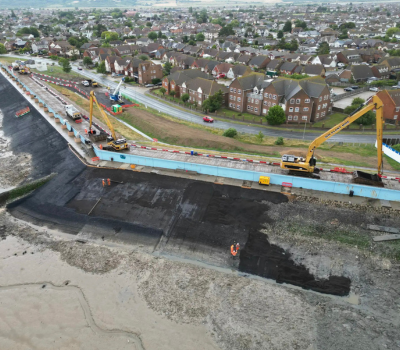
The TE2100 framework, led by the Environment Agency, demands high levels of environmental reporting and compliance. For Balfour Beatty, this meant keeping track of metrics like waste diversion, responsible sourcing, and carbon-related transport data all while working within the fast-paced environment of a live infrastructure project.
Manual processes were holding the team back. Sustainability and Environmental teams were spending significant time extracting, cleaning, and compiling data from a range of sources to meet reporting requirements. This not only created inefficiencies but also introduced room for error and delays in responding to client needs.
Their goals were clear:
- Meet strict reporting requirements set by the Environment Agency
- Reduce the manual effort tied to sustainability data collection and reporting
Improve consistency and trust in data across a multi-stakeholder framework
Why Qflow?
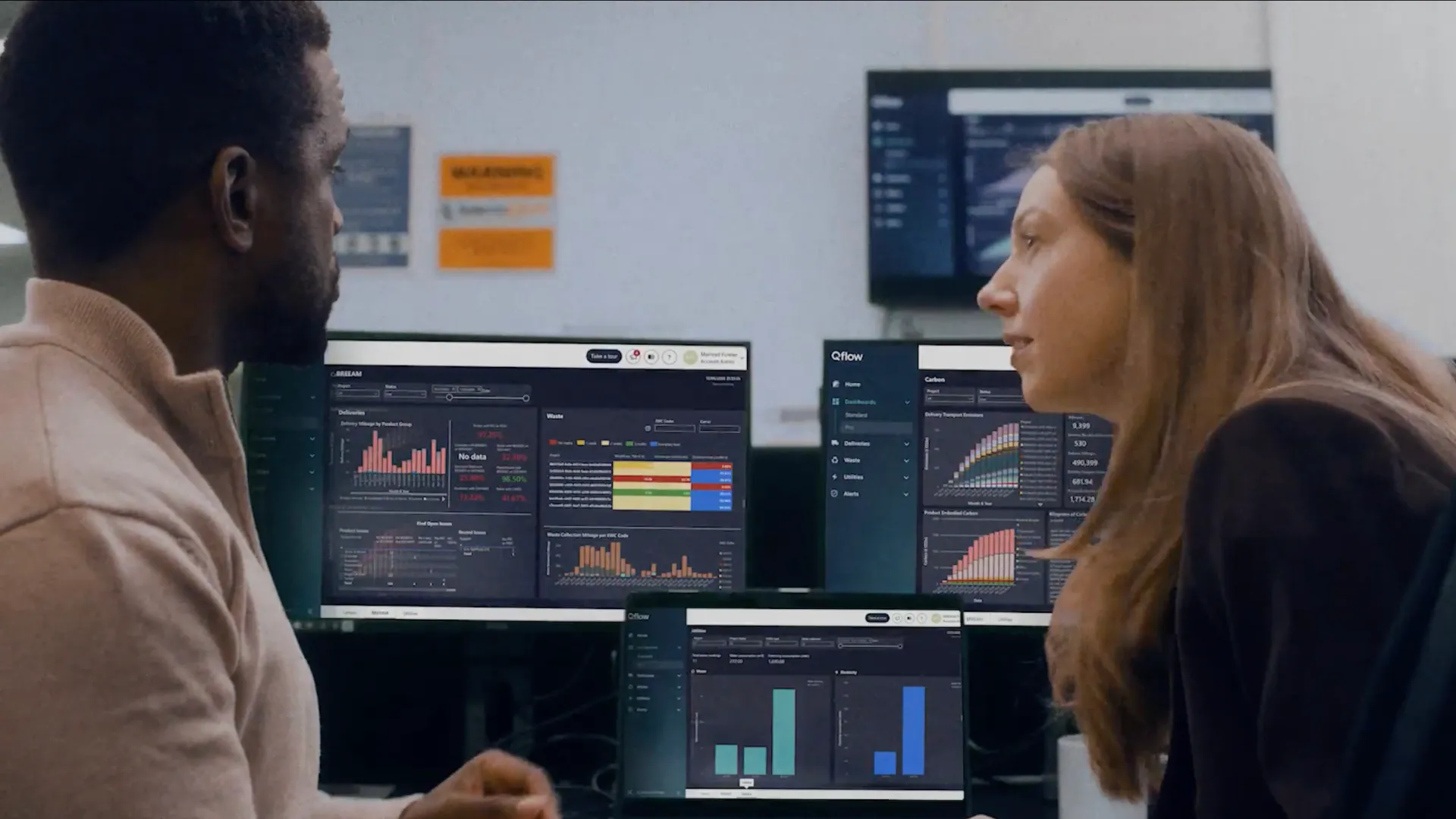
Balfour Beatty selected Qflow for its ability to automatically collect, process, and structure environmental data in real time. The platform offered an immediate solution to several key challenges:
- Automation: Reducing the admin burden for site and sustainability teams
- Confidence: Providing reliable data that could be used directly for client reporting
- Integration: Fitting smoothly into existing workflows with minimal onboarding required
Alignment: Capturing sustainability metrics that mapped directly to project KPIs
How They Use Qflow: Streamlined, On-Site Sustainability Intelligence
On the TE2100 framework, Qflow was used by the Sustainability and Environmental teams to monitor, track and report on key sustainability metrics, including:
- Waste diversion from landfill
- Use of secondary aggregates
- Responsible sourcing performance
- Transport and delivery compliance
These insights allowed Balfour Beatty to maintain close oversight of their environmental impact throughout the project lifecycle and to make data-led decisions with greater speed and clarity.
Importantly, the system supported operational needs without adding complexity. There was no need for lengthy training or new workflows. Just better data, delivered faster.
“The biggest support that Qflow offered was time-saving.Automation of the system provided workable, confident data for us to discuss with the client without needing to spend days going through documents.”
Leonard Connolly | Sustainability Manager | Balfour Beatty
The Results: Targets Exceeded, Time Reclaimed
By using Qflow, Balfour Beatty achieved environmental performance well above target, while reclaiming time previously lost to manual data management.
These outcomes not only strengthened project delivery under TE2100 but also enabled more productive client conversations. Teams had access to data they could trust – without needing to comb through countless documents to get there.
- 99% – Materials met responsible sourcing criteria (compared to a 20–30% target)
- 99% – Waste diverted from landfill
Scaling the Success
Following the success on the TE2100 framework, Balfour Beatty has begun rolling out Qflow across additional sites, including their work at Wallend Substation. By automating the process of collecting and validating environmental data, Balfour Beatty is unlocking value far beyond compliance. Streamlining these workflows means less time spent on admin, more confidence in the numbers, and faster, smarter decision-making across the board.
Their approach signals a wider industry shift: data-driven sustainability isn’t just about hitting environmental targets. It’s now a key business enabler that driving efficiency, improving data quality, and supporting long-term success.


Ready to see Qflow in action?
A 20-minute call to walk through the product on the parts that matter to your team.
News & Insights
Resources to build site better data.
Read insights, reports and practical guides on construction waste, carbon, materials, compliance and the changing role of data in the built environment.